
Sugar Free Pumpkin Pie: Keto, Low Carb Recipe (5 Net Carbs)


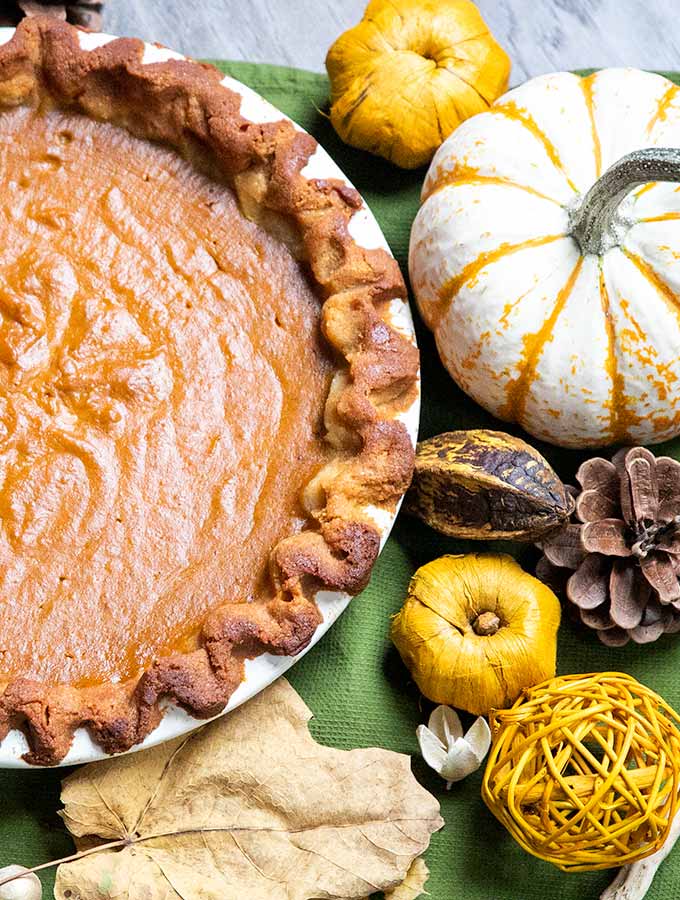
This sugar free pumpkin pie has been on my Thanksgiving table since 2020, and after another round of testing this past fall I am updating the recipe with what I have learned. It is a keto pumpkin pie at about five net carbs per slice, sweetened only with allulose, with a flaky almond flour crust that holds up next to the wheat-flour version my family eats at the same table. If you have ever wondered whether a low carb pumpkin pie can taste like the original, this is the closest I have made.
I am not a pumpkin desserts person by default. I love sugar free chocolate and that is normally where my dessert energy goes. But this pie genuinely converted me. The filling is silky and warmly spiced, the crust does not taste like a compromise and a slice will not knock anyone out of ketosis (if that’s your goal). It is a great pie to be able to serve to family members managing blood sugar without them having to skip dessert.
Table of Contents-Click to Expand
- Why This Sugar Free Pumpkin Pie Works
- Is Pumpkin Pie Healthy?
- Is Pumpkin Pie Good for Diabetics?
- The Sweetener: Why Allulose
- Almond Flour Pumpkin Pie Crust
- Comparing Keto Pie Crust Options
- Sugar Free Pumpkin Pie Filling
- Spices: Why Ceylon Cinnamon Matters
- Preventing a Too-Brown Crust
- Preventing Cracks on Top
- Crustless Sugar Free Pumpkin Pie
- Recipe
- Frequently Asked Questions
Disclaimer: Links may contain affiliate links, which means we may get paid a commission at no additional cost to you if you purchase through this page. Read our full disclosure here.
Why This Sugar Free Pumpkin Pie Works
Most keto pumpkin pie recipes you find online get one or two things right and skip the rest. Here is what makes this one different.
- Allulose only, no erythritol. The newest research on allulose is genuinely impressive and I walk through it below. I do not use Swerve or erythritol-blend sweeteners in this recipe anymore.
- Flaky almond flour crust. Coconut flour crusts dry out fast. Pecan crusts brown too quickly during the long pumpkin filling bake. Almond flour with a tablespoon of cold butter and a teaspoon of apple cider vinegar gives you the closest texture to a real pastry crust I have found in keto baking.
- Crustless option that actually tastes good. Skipping the crust drops the net carbs by roughly half, also lowers the calories and turns this into more of a pumpkin custard, which I serve in small ramekins with whipped cream.
- Real spices, not just pumpkin pie spice. I use individual spices because freshly ground cloves and Ceylon cinnamon make a noticeable difference. If you are short on time, a tablespoon of pumpkin pie spice works.
- Five net carbs per slice. Cut into 10 even pieces. Cut into 12 or 15 if you are serving with whipped cream or want to bring it under three net carbs.
Is Pumpkin Pie Healthy?
Traditional pumpkin pie is not what I would call healthy. A standard slice runs 25 to 35 grams of sugar from the filling alone, plus another layer of sugar and refined flour in the crust. That said, the pumpkin itself is genuinely nourishing, which is part of what makes a sugar free pumpkin pie worth making rather than skipping dessert entirely.
Pumpkin is one of the best dietary sources of lutein and zeaxanthin, two carotenoids that show up in eye, brain, and cardiovascular research. A 2024 review in Current Nutrition Reports highlighted pumpkin specifically as a rich source of these compounds and noted neuroprotective, cardioprotective, ophthalmological, antioxidant and anti-inflammatory effects. One cup of pumpkin puree also delivers around 12 grams of carbohydrate and three grams of fiber, which is why pumpkin works in a keto context where a starchy vegetable like sweet potato usually does not.
So is pumpkin pie healthy? The traditional version, no. This sugar free pumpkin pie, which keeps the pumpkin and the spices and removes the sugar and the wheat, gets a lot closer to a dessert that actually contributes something to your day instead of just costing you carbs.
Is Pumpkin Pie Good for Diabetics?
This is one of the most common questions I get during the holidays. Traditional pumpkin pie is not a great choice for someone managing blood sugar. A standard slice will push postprandial glucose meaningfully higher than a typical mixed meal because of the combination of refined wheat flour and added sugar.

A sugar free pumpkin pie made with allulose and almond flour is a very different conversation. Allulose has been shown across multiple human trials to actually lower the glucose response to a meal rather than raise it. A 2023 randomized controlled trial published in Nutrients found that adding 8.5 grams of allulose to a standard diabetic meal improved peak postprandial glucose in type 2 diabetes patients compared to the control diet. Almond flour adds protein and fat that further blunts any glucose response from the pumpkin itself.
I am not a medical doctor and this is not medical advice. If you are managing diabetes, talk with your physician or dietitian about whether this recipe fits your plan. What I can say is that this is the pie I serve to family members watching their blood sugar at Thanksgiving and I am comfortable doing so based on the ingredients and the research.
The Sweetener: Why Allulose
This is where I have actually changed my mind over the last several years and the recipe reflects it. The original version of this pie listed Swerve (an erythritol blend) as an acceptable substitute. I am no longer recommending erythritol-based sweeteners in my recipes and I want to explain why.
In February 2023, Nature Medicine published a study from the Cleveland Clinic that linked higher circulating erythritol levels to major adverse cardiovascular events (death, nonfatal heart attack, stroke) across three patient cohorts. The researchers also showed in vitro and in vivo that erythritol enhanced platelet reactivity and clot formation and that a single typical serving in healthy volunteers produced erythritol blood levels well above the threshold associated with increased platelet response, sustained for more than two days.
This is one study, in a specific population (people already undergoing cardiac risk assessment) and the authors themselves called for more research. I do not think it makes erythritol an emergency-stop-immediately ingredient. But since I have other options that come with positive evidence rather than emerging concern, I have switched to using only allulose and stevia.

Allulose is what I use now, both in this pie and across my keto baking. It is a rare sugar that occurs naturally in figs and raisins and has a glycemic index of zero. The research has gotten substantially better in the last three years.
- A 2023 systematic review and meta-analysis in PLoS One pooled multiple trials and found that both five gram and 10 gram doses of allulose significantly reduced the area under the curve for postprandial blood glucose in healthy humans.
- The 2023 Nutrients RCT mentioned above showed improved peak postprandial glucose with 8.5 grams of allulose in type 2 diabetes patients, using continuous glucose monitoring.
- A 2024 randomized double-blind crossover trial in the Journal of Nutritional Science and Vitaminology showed a dose-dependent reduction in both glucose and insulin response when allulose was added to a sucrose beverage.
That is a real evidence base for using allulose, not just avoiding sugar. I use granulated allulose in the filling and the crust. Allulose browns more than erythritol does, which is actually an advantage in a recipe where you want caramelization in the filling, but it is part of why I use a pie shield on the crust edges. More on that below.
Almond Flour Pumpkin Pie Crust
The crust is what makes or breaks a sugar free pumpkin pie. I went through quite a few rounds with this one. My first attempt used a pecan and almond flour blend, which tasted incredible but browned way too fast during the 45 to 60 minute filling bake. The version I landed on uses straight almond flour with cold butter cut in like a traditional pastry crust, plus a teaspoon of apple cider vinegar that helps tenderize the texture. It is the same almond flour pie crust I use in my keto strawberry pie, which gives you a sense of how versatile it is.
A few things to know going in. Almond flour is not interchangeable with almond meal here. You want the blanched, finely ground version. The xanthan gum is small but matters, it is the closest thing to gluten in this crust and without it the dough cracks badly when you try to roll it out. And the butter goes in cold, in pieces, not melted. Leaving small visible pieces of butter in the dough is what gives you a hint of flakiness once it bakes.
For more on the underlying techniques, I have a longer piece on keto baking tips that covers ingredient swaps, common failures, and how keto baking is genuinely different from wheat baking. Worth reading before your first attempt if pie crust generally intimidates you.
Comparing Keto Pie Crust Options
If you are wondering whether you can swap in a different crust, here is how the common options actually compare in a pumpkin pie context.
| Crust Type | Net Carbs per Slice | Texture | Browning Risk | Best For |
|---|---|---|---|---|
| Almond flour (this recipe) | ~5g | Tender, slightly flaky | Moderate, use pie shield | Closest to traditional |
| Coconut flour | ~3g | Dry, crumbly | High, browns very fast | Nut-free needs only |
| Pecan crust | ~4g | Crumbly, very rich | Very high, hard to manage | Short bake pies, not pumpkin |
| Crustless | ~2.5g | Custard-like | None | Lowest carb count |
| Traditional wheat | ~14-18g | Light, flaky | Low | Non-keto guests at your table |
One note on the wheat option. I know some keto purists will side-eye this, but if you are baking for a mixed table and not personally sensitive to gluten, using a traditional wheat crust with this keto filling gives you a slice around 14 to 18 carbs. Still meaningfully lower than a fully traditional pumpkin pie, and the crust will taste better than any keto version I have made. Keto is a lifestyle, not a religion. Make the choice that fits your day.
Sugar Free Pumpkin Pie Filling
The filling is where this recipe really delivers. The texture is silky, the spice level is forward without being aggressive and because there is no granulated sugar competing for moisture you get a denser, more custard-like result than a typical pumpkin pie. A few things matter here.

Pumpkin puree, not pumpkin pie mix. Pumpkin pie mix is already sweetened and spiced, usually with high fructose corn syrup and it will wreck the carb count. Check the label. You want one ingredient: pumpkin (or pumpkin and water). I have used both Libby’s and Trader Joe’s versions and both work fine.
Heavy whipping cream over evaporated milk. Traditional pumpkin pie uses sweetened condensed milk or evaporated milk, both of which are carby. Heavy cream gives you the richness without the sugar, and the small amount you use (half a cup) does not blow up the fat macros for a 10-slice pie.
Two whole eggs plus two yolks. The extra yolks are what makes the filling set into that classic custard texture rather than a wet, jiggly mess. Do not skip them.
If you want to make just the filling and skip the pie format entirely, this is a great base for a sugar free pumpkin pie filling that you can pour into ramekins and bake as individual custards. Twenty to 25 minutes at 350°F covered with foil, then five minutes uncovered. Each ramekin will be roughly 2.5 net carbs.
Spices: Why Ceylon Cinnamon Matters
If you have followed me for any time you know I have a thing about Ceylon cinnamon. The “cinnamon” in most American grocery stores is actually cassia, which is a different plant and has some real downsides at the levels we use in baking.
Cassia contains coumarin, a compound that can be hepatotoxic at higher intakes. A 2010 review in the journal Food and Chemical Toxicology covers the regulatory concern in detail. A 2013 paper in the same journal documented the substitution problem (most “cinnamon” sold in the US is cassia, not true cinnamon). True Ceylon cinnamon has very little coumarin and also shows up in interesting blood sugar research, including a 2009 review on cinnamon and diabetes biomarkers.
The other spice worth grinding fresh is cloves. I keep whole cloves and a small mortar and pestle on the counter and grind them as I go. The difference between fresh-ground and old pre-ground cloves is dramatic, especially in a sugar free pumpkin pie where you do not have a wall of sweetness covering up tired spices. If that level of effort is not in the cards, a tablespoon of good pumpkin pie spice in place of the individual spices works completely fine.
Preventing a Too-Brown Crust
This is the single biggest pitfall with any keto pumpkin pie because the filling takes 45 to 60 minutes to set, and almond flour browns faster than wheat flour. You absolutely need to protect the edges.
I use an adjustable pie shield. It is one of those tools I resisted for years and now I cannot believe I baked without it. It clips over the fluted edges of the crust and keeps them from going from golden to bitter-burned during the long bake. They are inexpensive and they fit different pie plate sizes.
If you do not want to buy one, you can fashion a foil ring out of aluminum foil. There is a clear tutorial on the Hamilton Beach blog if you have not done it before. Just know that foil is less reliable than a proper shield and can shift mid-bake.
I bake this pie in a roughly nine-inch ceramic pie plate that is about an inch and a half deep. Keep in mind pie plates are measured from inside edge to inside edge. A shallower tart pan also works and will actually cook faster, but you may need to reduce the filling slightly to avoid overflow.
Preventing Cracks on Top
Cracking is a custard problem, not a keto problem. Both traditional and sugar free pumpkin pies crack when they overbake. The fix is to pull the pie out when the center still has a slight jiggle, about a one to two inch zone in the middle that has not fully set. The residual heat will finish setting it as it cools, and the cooling-while-still-jiggly is what prevents the surface tension that causes cracks.
If you want insurance, you can bake the pie in a water bath the same way you would a keto cheesecake. The gentle, even moist heat almost eliminates cracking. It is more work and I do not bother for most weeknight baking, but for a Thanksgiving showpiece it can be worth it.
If the pie cracks despite your best efforts, it still tastes the same. You can press lightly to close any large cracks while warm, brush the top with a touch of sugar free maple syrup for shine, or do what I did for years and just hide the evidence under a generous pile of whipped cream. You can also use leftover crust dough to cut out leaf or pumpkin shapes, bake them separately, and arrange them on top to camouflage.
Crustless Sugar Free Pumpkin Pie
If you want the lowest carb option, or if you simply do not want to bother with the crust, you can absolutely make this crustless. Going crustless drops the net carb count from around five grams per slice to roughly 2.5 grams per slice, and the resulting dish is more like a baked pumpkin custard than a pie.
To make a crustless sugar free pumpkin pie, butter a nine-inch pie plate generously and pour the filling directly in. Bake at 375°F for 35 to 45 minutes, until the center has just a slight jiggle. The bake time is shorter because there is no crust to protect, and the dish itself heats faster.
You can also divide the filling between six to eight ramekins, place them on a sheet pan, and bake at 350°F for 20 to 25 minutes covered, then five minutes uncovered. Individual portions are great for dinner parties because nobody has to commit to a full slice.
Two things to note. There is no true no-bake version of this recipe that I would recommend. A no-bake pumpkin pie typically needs gelatin and a lot of sweetener to set and the texture becomes more pumpkin mousse than pumpkin pie. If that sounds appealing, search “keto pumpkin mousse” and you will find dedicated recipes. Second, this filling is not naturally vegan or dairy free. You would need to substitute coconut cream for the heavy cream and a flax egg system for the eggs, and the texture will not be the same.
Recipe
The full recipe card is below with exact measurements, step-by-step directions, and nutrition information. If you make this pie, please leave a rating on the recipe card. It is the single most helpful thing you can do to help other readers find recipes that actually work.
Sugar Free Pumpkin Pie: Keto, Low Carb Recipe
Ingredients
Keto Pie Crust
- 2 cups almond flour
- ¼ teaspoon xanthan gum
- ¼ teaspoon salt
- ⅓ cup allulose
- 1 egg white
- ½ teaspoon vanilla
- 1 teaspoon apple cider vinegar
- 3 tablespoons butter, cold
Pumpkin Pie Filling
Topping
- Whipped Cream, for serving (optional)

Instructions
Keto Pie Crust
- Add all dry ingredients into food processor and pulse to blend.
- Add the rest of the ingredients except butter and pulse until crumbs begin to form.
- Add butter and pulse until large crumbs begin to form and dough just starts to come together. Do not overwork the dough.
- Place dough covered in the freezer for at least 30 minutes, up to one hour.
- Preheat oven to 350 degrees convection or 375 for standard.
- Place the dough in between two pieces of parchment paper and roll out until slightly larger than pie plate.
- Roll the dough thin enough so that the edges overhang by about an inch.
- Fold over the extra dough as evenly as possible to make a thicken pie edge.
- Using your fingers, flute the edge of the crust. Alternatively, you can use a fork to press down the edges.
- Poke holes in the bottom of the crust with the tip of a knife or fork.
- Wrap the edges of your crust in foil or use a pie shield to protect the crust from getting too brown. This is a critical step to prevent over browning.
- Place in your preheated oven for about 10-12 minutes or until lightly browned.
- Remove and let crust cool while preparing the filling and decorations (if desired).
- If you want to make the fall shapes for decoration, make another batch or dough.
- Place decorative dough in freezer while making the pie filling.
- After at least 30 minutes in the freezer, use cookie cutters or knife to create leaves or other fall shapes.
Keto Pumpkin Pie Filling
- Add all ingredients to blender or food processor and mix thoroughly.
- Place filling into the crust.
Baking
- Preheat oven to 375°F.
- Place pie plate on a cookie sheet and place into the oven.
- Place fall shapes on a cookie sheet and place into the oven.
- Bake fall shapes until lightly browned, about 8-10 minutes and remove from the oven.
- Remove fall shapes from cookie sheet and let cool.
- Bake until pie is mostly firm but center is still slightly jiggly, 45 to 60 minutes depending on your oven.
- Remove pie from oven and let cool.
- Decorate with fall shapes if desired.
- Top each piece with whipped cream if desired and serve.
Video
Equipment
Notes
Nutrition
Did you make this recipe?
Be sure to tag @healnourishgrow on Instagram to be featured in our stories or our newsletter! We love it when you make our recipes and share with your friends. Please leave a rating on the recipe card above if you have a minute. It’s the single most helpful thing you can do to help other readers find recipes that actually work.
Frequently Asked Questions
Is pumpkin pie low carb?
Traditional pumpkin pie is not low carb. A standard slice runs 25 to 35 grams of carbs because of the sugar in the filling and the wheat flour crust. This sugar free pumpkin pie recipe brings that down to about five net carbs per slice by replacing the sugar with allulose and the wheat with almond flour.
Is pumpkin pie good for diabetics?
Traditional pumpkin pie is generally not recommended for people managing diabetes because of the high sugar and refined flour content. This sugar free version uses allulose, which has been shown in multiple human trials to actually reduce postprandial glucose response, plus almond flour, which adds protein and fat that further blunt blood sugar impact. Talk with your physician or dietitian before adding any new food to your plan.
Can I make this sugar free pumpkin pie without a crust?
Yes, and many readers prefer it this way. Going crustless drops the net carbs from about five grams per slice to roughly 2.5 grams per slice. Butter a nine-inch pie plate, pour the filling directly in, and bake at 375°F for 35 to 45 minutes until the center still has a slight jiggle. You can also divide into ramekins for individual servings.
What is the best sugar free sweetener for pumpkin pie?
I use allulose only in this recipe. Allulose has a glycemic index of zero, browns and caramelizes like sugar, and has solid recent human research showing it can reduce postprandial glucose. I no longer recommend erythritol-based sweeteners like Swerve in this recipe based on the 2023 Nature Medicine study linking higher circulating erythritol levels to cardiovascular events.
How many net carbs in a slice?
About five net carbs per slice when the pie is cut into 10 even slices. Cut it into 12 slices and you are at roughly four net carbs. Cut it into 15 (which works fine if you are serving with whipped cream) and you are around three net carbs per slice. Crustless cuts those numbers roughly in half.
Can I freeze sugar free pumpkin pie?
Yes, this pie freezes well. Let it cool completely, then wrap tightly in plastic wrap and foil. Freeze for up to three months. Thaw overnight in the refrigerator before serving. The texture holds up better than a traditional pumpkin pie because there is no sugar to crystallize and weep on thawing.
Can I make this pumpkin pie dairy free?
You can substitute full-fat coconut cream for the heavy whipping cream. The flavor will have a subtle coconut note, which I personally like with the pumpkin and spice. The butter in the crust can be swapped for cold solid coconut oil. The eggs are harder to replace and I have not personally tested a fully egg-free version.
Can I make this vegan?
This recipe is not naturally vegan. You would need to substitute coconut cream for the heavy cream, coconut oil for the butter, and a flax or chia egg system for the four total eggs and yolks. The texture will be more pumpkin mousse than custard. If a true vegan version is what you need, I would search for dedicated vegan keto pumpkin pie recipes rather than trying to convert this one.
How far in advance can I make this?
You can bake this pie up to two days ahead. Cool completely, cover tightly, and refrigerate. The flavor actually improves on day two as the spices meld. Add the whipped cream just before serving. If you need to make it further ahead, freeze it.
What size pie plate works best?
A nine-inch pie plate that is about an inch and a half deep is ideal. Pie plates are measured from inside edge to inside edge. If your plate is larger, the pie will be thinner and bake slightly faster. If it is smaller or deeper, you may have leftover filling, which you can bake in a buttered ramekin alongside the pie as a crustless single serving.
For more sugar free desserts that hit the same nostalgia notes without the sugar crash, try my keto pumpkin spice rum cake with pecan cream cheese glaze (a Thanksgiving staple in our house), the pumpkin cheesecake chaffle for fall breakfasts, or keto pecan pie cheesecake bars, which combine two of the best Thanksgiving desserts into one. And if you want a savory pumpkin recipe to balance out the dessert, my pumpkin turkey chili with sweet potato and black beans has been on heavy rotation since November.
Shawna
Can you just substitute pumpkin pie spice for all the single spices?
Cheryl McColgan
Absolutely! I know it’s long to read all of the text but I mention that you can easily use pumpkin pie 🥧 spice instead.