Skip to content

Keto Baking Tips

Keto Baking Tips

There are quite a few things I’ve learned getting into keto baking. I’ve baked for many years, at times quite seriously, but low carb baking is a bit of a different animal! No doubt there is much more to learn, but these are my best tips so far. Look for updates to this post as I learn even more and continue to experiment.

Disclaimer: Links below may contain affiliate links, which means we may get paid a commission at no additional cost to you if you purchase through this page. Read our full disclosure here.

About Keto Flour

The two most commonly used flours in keto baking are almond and coconut. Coconut flour is a lot more absorbent than either regular flour or almond flour so it can be used sparingly to absorb some moisture. Combining it with almond flour also seems to mitigate the flavor some people taste with coconut flour, that’s why a lot of keto baking recipes use more than one kind of flour. A combination also changes the texture of your baked goods. Coconut flour only items tend to be denser while almond flour creates a lighter result.

Almond flour tends to clump a bit. A sifter is useful if you have it…I’d really like to get an old-school sifter like I used in my grandma’s kitchen…but until then, a fork works. It’s also nice to completely blend the dry ingredients before moving on and a sifter or fork accomplishes that well.

One keto flour that I haven’t tried yet but have seen others use is lupin flour. It has a high protein content at about 40 percent and 30 percent fiber. At one net carb per quarter cup it’s definitely keto friendly. It’s on my list to test some recipes with this soon.

Always be careful to check the carb count on the keto flour you’re using. Carb counts between different manufacturers can vary slightly and not all gluten-free flour or products are low carb.

Sugar Alternatives for Keto Baking

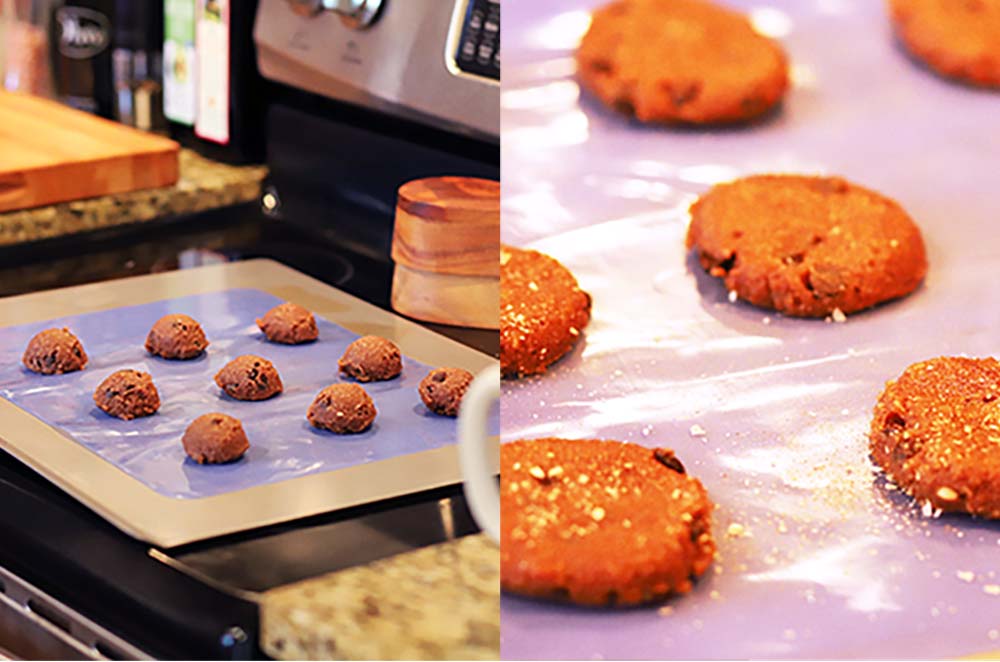
So far I haven’t found any of the flours or sugar alternatives used in keto baking allow for cookies to “spread” like traditionally made cookies do. It’s necessary to use the back of a spatula or your fingers to flatten them out a bit before baking. Note the before and after photo below for Chewy Keto Double Chocolate Chip Cookies.
Keto Baking Tips

Finally, keto cookies and other baked goods don’t taste like an exact copy of the “real” thing. If you can suspend thinking about the cookies you know and grew up with, these are very good in their own right. Just slightly different. If someone can ever come up with a carb-free flour that truly mimics wheat that person will be worshiped by us keto folk like no other!

Until then, at least we have substitutes that fill the need whenever the occasional sweet tooth strikes.

Author

  • Cheryl McColgan

    Cheryl McColgan is the Founder and Editor in Chief of Heal Nourish Grow, where she has published evidence-based health and nutrition content since 2018.

    With over 30 years of experience in fitness, nutrition, and healthy living, and nearly 20 years of professional editorial and journalism experience, she brings both subject-matter depth and trained editorial judgment to everything on the site.

    Cheryl holds a degree in Psychology with a minor in Addictions Studies, completed graduate training in Clinical Psychology, and is a NASM Certified Personal Trainer and E-RYT Certified Yoga Instructor and trained in Yoga Therapy.

    She is the author of 21 Day Fat Loss Kickstart, Make Keto Easy, Take Diet Breaks and Still Lose Weight, The Grain Free Cookbook for Beginners, and Easy Weeknight Keto.

    Read more about Cheryl and the journey that created Heal Nourish Grow on the about page.

    Cheryl McColgan is the founder of Heal Nourish Grow, where she writes about protein, body composition, healthy aging, and evidence-based nutrition and wellness along with the everyday habits that actually make those things work in real life.

    With a background in psychology and graduate training in clinical psychology, plus nearly 20 years of experience in editorial and publishing, Cheryl approaches health from both a research and real-world perspective. She’s also been immersed in fitness and nutrition for more than 25 years, which gives her a practical lens most purely academic content tends to miss.

    Her work today focuses heavily on protein intake (especially for women), muscle retention, metabolic health, and sustainable fat loss, along with topics like sleep, wellness, recovery, and wearable health tech. You’ll also find a mix of high-protein, low-carb recipes designed to make hitting those goals easier without overcomplicating things.

    Cheryl’s interest in health and nutrition became more personal after navigating her own health challenges, which pushed her to dig deeper into how lifestyle, diet and daily habits impact long-term health. That experience continues to shape how she approaches everything on this site: practical, realistic, and focused on what actually works over time.

    What Cheryl Covers

    Most of the content here falls into a few core areas:

    Protein & Muscle Health: how much you actually need, especially for women and how to use protein to support strength, body composition, and aging
    Fat Loss & Metabolic Health: sustainable approaches that prioritize muscle retention and long-term results
    Healthy Habits & Lifestyle: sleep, movement, strength training, consistency, and the small things that compound over time
    Wearables & Recovery: real-world testing and comparisons of tools like Oura, Whoop and others
    High-Protein & Low-Carb Recipes: simple, realistic meals that support your goals without feeling restrictive
    Travel & Lifestyle: wellness-focused travel, outdoor experiences, and a slightly more elevated take on healthy living

    If you're new, here are a few good places to begin:

    30 Day Healthy Habits Challenge

    Protein Foundations

    High Protein Recipes

    About Cheryl & Heal Nourish Grow

    Coaching and Programs