
Turkey Brine Recipe: Easy Wet and Dry Brine for a Juicy Bird (Sugar-Free Options)



Updated August 18, 2026
If you are wondering how to easily brine a turkey, you are in the right spot. This is the ninth year I will be smoking our Thanksgiving turkey and along the way I have learned that brining is the single most important step for a juicy, flavorful bird. This guide covers both wet brine and dry brine methods, plus a sugar-free keto-friendly option for each. Whether you are roasting in the oven, smoking on a Weber Smoky Mountain or pellet grill, or even spatchcocking for a faster cook, the right brine makes all the difference.
I started smoking our Thanksgiving turkey in 2018 and have not stopped since. Over those nine years I have tested wet brines, dry brines, different salts, different timings, citrus, herbs, smoking whole versus spatchcocked. What you will find below is the simplified version of what actually works, with the science behind it and the specific ratios that have given me the juiciest turkey every single time.
Nine years of tending charcoal is a big part of why I finally agreed to test a pellet smoker, and I wrote up the specs, the warranty fine print and what I still cannot tell you in my Z Grills 1000D4E review.
Disclaimer: Links may contain affiliate links, which means we may get paid a commission at no additional cost to you if you purchase through this page. Read our full disclosure here.
Table of Contents-Click to Expand
- Wet Brine vs Dry Brine: Which Should You Choose?
- What Turkey Brine Actually Does
- How to Wet Brine a Turkey
- How to Dry Brine a Turkey
- Which Salt to Use for Brining
- Important: Pre-Brined and Self-Basting Turkeys
- What to Do After Brining
- Cooking a Brined Turkey (Oven, Smoker, Spatchcock)
- Troubleshooting: Too Salty, Spongy, or Bland
- Brining Turkey Breast or Legs Separately
- Make-Ahead Brining Timeline
- Frequently Asked Questions
Wet Brine vs Dry Brine: Which Should You Choose?
The biggest brining decision is wet versus dry. Both methods produce juicy, well-seasoned turkey, but they get there differently and have different tradeoffs. After trying both for nine years running, I lean toward wet brine when I am smoking and dry brine when I am roasting in the oven, but either method works for either cooking style.
| Factor | Wet Brine | Dry Brine |
|---|---|---|
| Time required | 12 to 24 hours | 24 to 72 hours |
| Equipment | Large stockpot or food-safe bucket | Rimmed baking sheet with wire rack |
| Fridge space | Significant (whole vessel) | Minimal (single sheet pan) |
| Mess factor | High (gallons of liquid) | Very low |
| Skin crispness | Good if dried after brining | Excellent (skin air-dries during brining) |
| Flavor depth | More aromatic infusion possible | More concentrated meat flavor |
| Best for | Smoking, longer cook methods | Roasting, smaller fridges, busy schedules |
| Risk of over-salting | Lower | Higher if you overdo the salt |
If you are short on fridge space or short on time, dry brine wins. If you want maximum aromatic flavor (citrus peels, juniper berries, fresh herbs steeped into the bird) and you have the room, wet brine is the better choice.
What Turkey Brine Actually Does
Brining works through osmosis and protein denaturation. The salt pulls some moisture out of the meat initially, then dissolves into that liquid and gets reabsorbed into the muscle fibers along with any seasonings. The salt also breaks down some of the muscle proteins, which is why brined turkey stays juicy even when slightly overcooked. Cook’s Illustrated has documented that brined poultry retains roughly 10 percent more moisture during cooking than unbrined birds.
This matters most for turkey because it is a lean, large bird that takes a long time to cook. Without brining, the breast meat almost always overcooks before the dark meat is done. Brining buys you a margin of error.
For me as someone focused on protein quality, brining is also an easy way to make sure expensive pasture-raised or heritage turkeys come out perfectly. I get our turkey from a local farm when possible, but Butcher Box, Wild Pastures and US Wellness Meats ship pasture-raised turkeys that work beautifully with either brine method below. If you’d also like to try a great method for your steaks, be sure to check out how to reverse sear a frozen steak, you’ll never thaw again!
How to Wet Brine a Turkey
Wet brine is the classic method and the one I use when I am planning to smoke. The aromatic infusion you get from steeping orange peel, sage and peppercorns in salt water is hard to replicate with a dry brine.
What You Need for Wet Brining
- A vessel large enough to hold the turkey fully submerged. A 35 to 45 quart stockpot, food-safe brining bag inside a roasting pan, or a clean dedicated cooler all work.
- Refrigerator space OR a cooler with ice and a thermometer to keep the brine under 40°F.
- Kosher salt (1 cup Diamond Crystal or 3/4 cup Morton’s per gallon of water).
- Optional aromatics: rosemary, sage, thyme, peppercorns, juniper berries, allspice, bay leaves, citrus peel.
Food safety note: brine must stay between 33 and 40°F the entire time the turkey is in it. Above 40°F, you are growing pathogens. If you do not have fridge space and you are using a cooler, plan on adding ice every few hours and use a probe thermometer to verify the temperature. I keep my Weber Smoky Mountain probe thermometer in the cooler so I can keep it closed and still get an alert if the temperature creeps up.
Wet Brine Salt-to-Water Ratio
The ratio that has worked for me consistently is 1 cup of Diamond Crystal kosher salt per 1 gallon of water (or 3/4 cup of Morton’s kosher salt per 1 gallon). Most turkeys need 2 to 3 gallons of brine to be fully submerged.

Wet Brining Time by Turkey Size
| Turkey Size | Minimum Brine Time | Maximum Brine Time | Sweet Spot |
|---|---|---|---|
| 10 to 12 lb | 12 hours | 18 hours | 14 hours |
| 13 to 15 lb | 12 hours | 20 hours | 15 hours |
| 16 to 18 lb | 14 hours | 22 hours | 16 hours |
| 19 to 22 lb | 16 hours | 24 hours | 18 hours |
Going beyond the maximum is when you risk a spongy texture and oversalted meat. Set a phone alarm if you are brining overnight, the difference between 18 and 24 hours can be the difference between perfect and overdone.
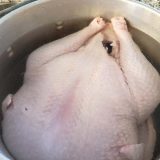
The full wet brine recipe (which is naturally sugar-free and keto-friendly) is in the recipe card below.
Keto Turkey Brine
Ingredients
- 4 quarts cold water, or amount to cover turkey fully
- 1 cup kosher salt, or 3/4 cup table salt
- ice cubes
- Aromatic options, rosemary sprigs, bay leaf, peppercorns, cloves, juniper berries, allspice berries, orange peels, lemon peels, etc.
- 1 whole turkey

Instructions
- Heat one quart of water to boiling.
- Dissolve salt in the hot water.
- Add ice cubes to the hot water to bring the temperature down or put salt water solution in the refrigerator over night.
- Add 3 more quarts of water and aromatics to the saltwater solution.
- In a large stockpot, add the raw, thawed turkey then pour the water mixture over it.
- Add extra water if needed to cover the turkey completely.
- Allow the turkey to brine for at least 12 hours and up to 24 based on size.
Equipment

Nutrition
Did you make this recipe?
Be sure to tag @healnourishgrow on Instagram to be featured in our stories or our newsletter! We love it when you make our recipes and share with your friends. Please leave a rating on the recipe card above if you have a minute. It’s the single most helpful thing you can do to help other readers find recipes that actually work.
How to Dry Brine a Turkey
Dry brining (also called pre-salting) has become my go-to method when I am roasting in the oven instead of smoking. There is no liquid involved, no giant container hogging the fridge and the resulting skin is the crispiest you will ever produce. The salt draws moisture out of the meat, dissolves into that moisture, and then gets reabsorbed along with any seasonings you mixed in.
Dry Brine Salt Per Pound
The right amount of salt is critical with dry brine because there is no water to dilute things. Use 3/4 teaspoon of Diamond Crystal kosher salt (more easily found) per pound of turkey or 1/2 teaspoon of Morton’s kosher salt per pound. I’ve switched to using Vera Salt which is microplastic free. A 15 pound turkey needs roughly 1/4 cup of crystals or 3 tablespoons of fine salt.
Dry Brining Steps
- Pat the fully thawed turkey very dry inside and out with paper towels.
- Mix the dry brine (recipe card below) in a small bowl.
- Gently loosen the skin over the breast and thighs without tearing it.
- Rub roughly half the brine directly onto the meat under the skin. Pay extra attention to the breasts since they are thickest.
- Sprinkle the rest of the brine evenly over the outside of the skin and a little inside the cavity.
- Place the turkey on a wire rack set inside a rimmed baking sheet.
- Refrigerate uncovered for 24 to 72 hours. The uncovered part is what dries the skin out and makes it crispy when cooked.
- Do not rinse before cooking. Just pat off any excess moisture and proceed to your cooking method.

Dry Brining Time by Turkey Size
| Turkey Size | Minimum Dry Brine Time | Best Results |
|---|---|---|
| 10 to 12 lb | 24 hours | 36 to 48 hours |
| 13 to 15 lb | 24 hours | 48 hours |
| 16 to 18 lb | 36 hours | 48 to 72 hours |
| 19 to 22 lb | 48 hours | 72 hours |
Unlike wet brining, you really cannot over-dry-brine within reason. 72 hours is the practical limit just because the meat texture starts to change beyond that point.

Easy Dry Brine for Turkey (Sugar-Free)
Ingredients
- ¼ cup kosher salt, Diamond Crystal OR 3 tablespoons Morton’s kosher salt
- 1 tablespoon baking powder, for crispy skin, optional but recommended
- 1 tablespoon dried rosemary, crushed
- 1 tablespoon dried thyme
- 2 teaspoons dried sage
- 2 teaspoons cracked black pepper
- 2 teaspoons garlic powder
- 1 teaspoon onion powder
- Zest of 1 orange or lemon, optional
Instructions
- Make sure the turkey is fully thawed and patted very dry with paper towels.
- Mix all ingredients in a small bowl until evenly combined.
- Gently loosen the skin over the breast and thighs, leaving the skin intact.
- Rub roughly half the dry brine directly onto the meat under the skin.
- Sprinkle the remaining brine evenly over the outside of the skin and inside the cavity.
- Place the turkey on a wire rack set inside a rimmed baking sheet.
- Refrigerate uncovered for 24 to 72 hours. The longer you brine, the more flavorful and crisp the skin will be.
- Do not rinse before cooking. Pat any excess moisture from the skin with paper towels just before roasting or smoking.
Equipment
Notes
Did you make this recipe?
Be sure to tag @healnourishgrow on Instagram to be featured in our stories or our newsletter! We love it when you make our recipes and share with your friends. Please leave a rating on the recipe card above if you have a minute. It’s the single most helpful thing you can do to help other readers find recipes that actually work.
Which Salt to Use for Brining
This matters more than people realize. Different salts have different crystal sizes, which means a cup of one is not the same as a cup of another. Using the wrong salt or the wrong amount is the single most common reason a brine fails.
| Salt Type | Wet Brine (per gallon water) | Dry Brine (per lb turkey) | Notes |
|---|---|---|---|
| Diamond Crystal Kosher | 1 cup | 3/4 teaspoon | The standard, lightest crystals |
| Morton’s Kosher | 3/4 cup | 1/2 teaspoon | Denser crystals, use less |
| Pink Himalayan (fine) | 3/4 cup | 1/2 teaspoon | Works well, slightly mineral flavor |
| Sea Salt (coarse) | 3/4 cup | 1/2 teaspoon | Acceptable substitute |
| Table Salt (iodized) | 1/2 cup | 1/4 teaspoon | Avoid if possible, can taste metallic |
If you are buying salt specifically for this, get Diamond Crystal kosher salt. Almost every recipe online assumes Diamond Crystal as the default unless otherwise specified, and it is much harder to over-salt with because the crystals are large and forgiving.
Important: Pre-Brined and Self-Basting Turkeys
Read the turkey label before you brine. Many supermarket turkeys are labeled “self-basting”, “enhanced” or “kosher” and have already been injected with a salt solution. If you brine these on top of what is already there, the bird will be inedibly salty.
What to look for: words like “natural” or “no added solution” or a percentage statement on the label like “contains up to 8 percent water solution”. If you see any kind of solution percentage, skip the brine entirely or cut your salt in half. Pasture-raised birds from a local farm or a service like Butcher Box are almost never pre-brined and are the easiest to work with.
What to Do After Brining
The post-brine steps are nearly the same for both methods, with one important difference: rinse the wet-brined turkey, do not rinse the dry-brined one.

- Wet brine only: Remove the turkey from the brine and rinse briefly under cold water to wash off excess surface salt.
- Pat the turkey thoroughly dry with paper towels, inside and out.
- Let the turkey rest uncovered in the fridge on a wire rack for at least an hour (or up to overnight) so the skin can dry. This is critical for crispy skin.
- Rub the skin with olive oil or melted butter just before cooking. This helps the rub adhere and crisps the skin.
- Apply a sugar-free turkey rub (recipe below) and stuff the cavity with aromatics like onion, fresh sage, lemon and a few garlic cloves.
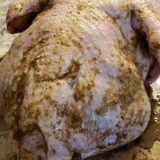
The keto turkey rub recipe below uses equal parts rosemary, sage, thyme, garlic salt, smoked paprika and black pepper bound with olive oil. No sugar, completely keto-friendly, and works on top of either the wet or dry brine.
Keto Turkey Rub
Ingredients
- 2 teaspoon cracked black pepper
- 2 teaspoon smoked paprika
- 2 teaspoons dried rosemary
- 2 teaspoons dried thyme
- 2 teaspoon dried sage
- 2 teaspoons garlic salt
- 2 tablespoons olive oil
Instructions
- Mix all of the spices together.
- You can either oil the turkey directly then add the spices, or mix the oil in with the spices then rub.
- Smoke or bake your turkey.
Nutrition
Did you make this recipe?
Be sure to tag @healnourishgrow on Instagram to be featured in our stories or our newsletter! We love it when you make our recipes and share with your friends. Please leave a rating on the recipe card above if you have a minute. It’s the single most helpful thing you can do to help other readers find recipes that actually work.
Cooking a Brined Turkey (Oven, Smoker, Spatchcock)
Once your turkey is brined, dried and rubbed, the cooking part is the easy part. Brining gives you significant margin for error since the meat will stay juicy even if you go a little long.
Oven-Roasted Brined Turkey
Roast at 325°F until the breast reads 150°F (it will rise to the safe 165°F during the rest period). Plan for roughly 13 minutes per pound for an unstuffed turkey. Tent loosely with foil if the skin browns too fast. Let the turkey rest for at least 20 minutes before carving. I recommend the Thermopro wireless thermometer whether you’re cooking the brined turkey in the oven or on the smoker.
Smoked Brined Turkey
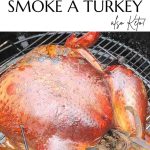
I have smoked our Thanksgiving turkey on a Weber Smoky Mountain 22-inch for nine years now and it has not let me down once. I have been considering a switch to a pellet grill for the convenience (set it and forget it without managing charcoal), but the WSM produces a flavor I love and runs reliably for the 8 to 10 hours a whole turkey needs.

For smoking, run the smoker at 225 to 250°F. Plan on 30 to 40 minutes per pound to reach an internal breast temperature of 150°F (rising to 165°F during rest). Apple, pecan, cherry, hickory or maple woods all pair well with poultry. Keep the water tray full to maintain moisture in the cook chamber.
One important food safety note for whole turkey smoking: keep birds 15 pounds or under to avoid the meat sitting in the danger zone (40 to 140°F) too long. For larger birds, smoke for 4 to 5 hours then finish in a 325°F oven to rocket through the danger zone safely. The uptake of smoke is pretty much finished by then anyway, so putting it in the oven for the final hours works well.
Spatchcock Smoked Turkey (My New Favorite)

The last few years I have been spatchcocking the turkey before smoking. You remove the backbone with kitchen shears and flatten the bird, which cuts the smoking time in half (roughly 15 to 20 minutes per pound at 275°F) and lets the breast and thighs cook more evenly. The first year I did this, I broke my kitchen shears so I bought these more serious poultry shears on Amazon and I can attest they work perfectly.
The skin also crisps better since more of it is exposed to the heat. Spatchcocking is my preferred method now and I will be putting up a dedicated guide on smoking turkey including the spatchcock technique soon.
Troubleshooting: Too Salty, Spongy, or Bland
My turkey is too salty
Most likely causes: you used Morton’s at the Diamond Crystal ratio (Morton’s is denser, so a cup of it has more salt), you used table salt instead of kosher, you brined a pre-injected turkey, or you brined too long. If the bird is already cooked and salty, slice the meat thin and serve with lots of unsalted gravy and unsalted sides to balance.
The texture is spongy or rubbery
This is the classic over-brined symptom. Wet brining beyond 24 hours starts to break down the protein structure too much. Stick to the time chart above. Dry brining is more forgiving but going past 72 hours can also create texture issues.
The skin is not crispy
Skin crispness comes from drying the skin out before cooking. After a wet brine, the skin will be very wet. The fix is to pat it dry, then leave the turkey uncovered in the fridge for several hours (or overnight) so the surface moisture evaporates. The baking powder in the dry brine recipe also helps because it raises the pH of the skin and creates more browning.
The turkey tastes bland
Either the brining time was too short or the salt amount was too low. Brining time really does need to hit the minimums in the chart. The other issue I sometimes see is people skipping the rub entirely. The brine seasons the inside of the meat, but the rub is what gives the skin and surface that final flavor layer.
Brining Turkey Breast or Legs Separately
Both methods scale down beautifully for partial cuts. For a turkey breast (4 to 7 pounds), wet brine for 4 to 6 hours or dry brine for 12 to 24 hours. For turkey legs, wet brine for 6 to 8 hours, dry brine for 12 to 18 hours. The same salt-to-water and salt-per-pound ratios apply.
Brined turkey legs smoked low and slow are honestly one of my favorite things to make any time of year, not just at Thanksgiving.
Make-Ahead Brining Timeline
If you are hosting Thanksgiving and feeling overwhelmed, here is the timeline that has worked for me for nine years running. Adjust based on whether you are wet or dry brining.

- 5 to 6 days out: If your turkey is frozen, move it to the fridge to thaw. Plan 24 hours of thaw time per 5 pounds.
- 3 days out: Confirm the turkey is fully thawed. Start a dry brine if you are using that method.
- 2 days out: Mix and chill your wet brine if using. If you’re getting a fresh turkey (I get mine from a local farm), this is a great day to pick it up.
- 1 day out (afternoon): Place turkey in the wet brine, refrigerate.
- Day of (morning): Remove from brine, rinse if wet-brined, pat dry, rest uncovered in fridge for 1 hour.
- Day of (1 hour before cooking): Apply olive oil, rub and aromatics. Let come closer to room temperature.
- Cook, rest 20 minutes, carve and serve.
And while the turkey is brining or cooking, you can knock out the other Thanksgiving sides. A few keto-friendly options: keto cornbread, sausage and oyster keto stuffing, keto cranberry sauce, keto pumpkin pie and pecan pie cheesecake bars.
Frequently Asked Questions
How long do you brine a turkey?
For wet brine, plan on 12 to 24 hours depending on size. For dry brine, plan on 24 to 72 hours. The sweet spot for most turkeys is 14 to 18 hours wet or 36 to 48 hours dry. Going longer than the maximum will result in a spongy texture and overly salty meat.
What is the salt to water ratio for turkey brine?
Use 1 cup of Diamond Crystal kosher salt or 3/4 cup of Morton’s kosher salt per gallon of water. Most turkeys need 2 to 3 gallons of brine to be fully submerged. Never use table salt at the same ratio, it would be much too salty since the crystals are denser.
Do you rinse a turkey after brining?
Rinse a wet-brined turkey briefly under cold water to remove surface salt, then pat dry. Do not rinse a dry-brined turkey. The dry brine is meant to stay on and continue seasoning the meat through cooking.
Can you brine a frozen turkey?
No. The turkey needs to be fully thawed before brining so the salt can actually penetrate the meat. Plan on 24 hours of refrigerator thaw time for every 5 pounds of turkey.
Can you brine a self-basting or kosher turkey?
It is not recommended. Self-basting, enhanced and kosher turkeys are already injected with a salt solution. Brining on top of that produces an inedibly salty bird. Read the label, if it mentions any solution percentage, skip the brine.
How long to brine a 15 lb turkey?
For wet brine, brine a 15 pound turkey for 14 to 16 hours. For dry brine, plan on 36 to 48 hours. Going longer than 20 hours wet or 72 hours dry will start to affect texture.
How long to brine a 20 lb turkey?
For wet brine, brine a 20 pound turkey for 16 to 18 hours, up to a maximum of 24 hours. For dry brine, plan on 48 to 72 hours.
Wet brine or dry brine, which is better for turkey?
Both produce juicy, flavorful turkey. Dry brine is easier, takes less fridge space and produces crispier skin. Wet brine allows for more aromatic infusion (citrus peel, herbs, peppercorns) and is the better choice if you are smoking the turkey.
Can you reuse turkey brine?
No. Used brine has been in contact with raw turkey and is a food safety hazard. Discard it after a single use.
Can you brine a turkey too long?
Yes. Wet brining beyond 24 hours starts to break down the muscle fibers too much, producing a spongy texture. Dry brining beyond 72 hours has a similar effect. Stick to the time charts above for best results.
Do you need sugar in turkey brine?
No. Sugar is sometimes added for browning and flavor, but it is not necessary for the brine to work. The salt is what does all the work of seasoning and tenderizing the meat. A sugar-free brine is keto and diabetic friendly without sacrificing any of the juiciness.
Why is my brined turkey too salty?
The most common causes are using Morton’s kosher salt at the Diamond Crystal ratio (Morton’s is denser, use less), brining a pre-injected turkey, brining too long, or using table salt. Always check what kind of salt the recipe assumes and adjust accordingly.
If you make this turkey brine recipe, leave a comment below or tag @healnourishgrow on Instagram. I would love to see how your bird turns out. And if you want all of my favorite Thanksgiving recipes in one place, the keto Thanksgiving cookbook has everything you need for a complete sugar-free holiday spread.
Easy Dry Brine for Turkey (Sugar-Free)
Ingredients
- ¼ cup kosher salt, Diamond Crystal OR 3 tablespoons Morton’s kosher salt
- 1 tablespoon baking powder, for crispy skin, optional but recommended
- 1 tablespoon dried rosemary, crushed
- 1 tablespoon dried thyme
- 2 teaspoons dried sage
- 2 teaspoons cracked black pepper
- 2 teaspoons garlic powder
- 1 teaspoon onion powder
- Zest of 1 orange or lemon, optional
Instructions
- Make sure the turkey is fully thawed and patted very dry with paper towels.
- Mix all ingredients in a small bowl until evenly combined.
- Gently loosen the skin over the breast and thighs, leaving the skin intact.
- Rub roughly half the dry brine directly onto the meat under the skin.
- Sprinkle the remaining brine evenly over the outside of the skin and inside the cavity.
- Place the turkey on a wire rack set inside a rimmed baking sheet.
- Refrigerate uncovered for 24 to 72 hours. The longer you brine, the more flavorful and crisp the skin will be.
- Do not rinse before cooking. Pat any excess moisture from the skin with paper towels just before roasting or smoking.
Equipment
Notes
Did you make this recipe?
Be sure to tag @healnourishgrow on Instagram to be featured in our stories or our newsletter! We love it when you make our recipes and share with your friends. Please leave a rating on the recipe card above if you have a minute. It’s the single most helpful thing you can do to help other readers find recipes that actually work.