
Massaged Kale Walnut Salad with Lemon and Parmesan


Kale walnut salad is one of those dishes that earns its place in the rotation. Lacinato kale, lemon, parmesan and toasted walnuts. Four ingredients that actually matter, with a couple of supporting players. The trick that makes it work and the step most people skip, is massaging the kale.
I've been making some version of this salad since 2018 and the recipe has gotten even more simple over the years, not more complicated. The original version on the site was solid but I wanted to build out everything I've learned about getting kale right over the years, which kale to use, how to scale it for a high-protein meal and the variations that actually hold up in the fridge.
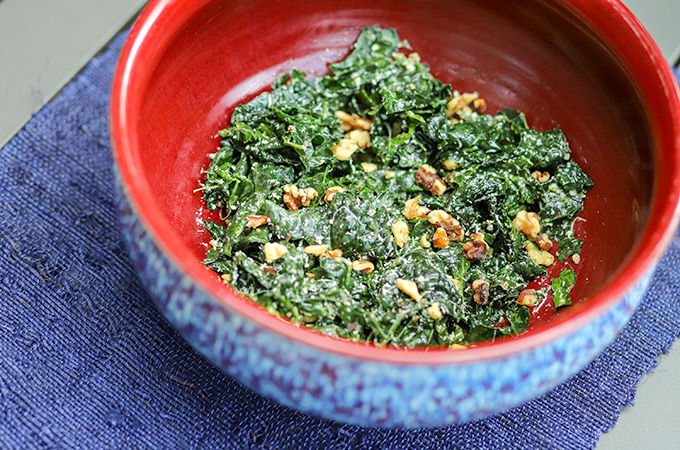
This is a base recipe with four variations folded in (apple, cranberry, goat cheese or vegan, and a Caesar twist), plus a “make it a meal” section for when you want to add real protein. The whole thing comes together in 10 minutes and holds well enough to make ahead.
Table of Contents-Click to Expand
- Why This Massaged Kale Walnut Salad Works
- Health Benefits of Kale, Especially for Women Over 40
- How to Massage Kale (and Why It's the Step Everyone Skips)
- Lacinato Kale vs Curly Kale: Which to Use
- Ingredients and Substitutions
- Four Variations to Try
- How to Make It a High-Protein Meal
- What to Serve With Kale Walnut Salad
- How to Store and Meal Prep
- A Note on Kale and Oxalates
- Frequently Asked Questions
Disclaimer: Links may contain affiliate links, which means we may get paid a commission at no additional cost to you if you purchase through this page. Read our full disclosure here.
Why This Massaged Kale Walnut Salad Works
The Mediterranean playbook tends to be right about most things and this salad sits squarely in it. Lacinato kale, lots of lemon, good olive oil, parmesan, walnuts. Salty, bitter, sweet, fatty and acidic in proportions that make sense.
What makes this version different from a hundred other kale salads online is honestly nothing radical, just paying attention to a few details that get cut for time in most recipe articles.
First, lacinato kale (also called dinosaur or Tuscan kale) for the salad. It's flatter, less bitter and softens better than curly kale. Curly kale works, especially if you're making a slaw-like version, but for a true salad lacinato is what you want.
Second, actually massaging the kale. Not stirring, not tossing. Squeezing the dressing into the leaves with your hands until they wilt and turn a deeper green. This is the difference between a salad that's pleasant and a salad that's tough.
Third, toasting the walnuts. Two minutes in a dry skillet over medium heat. It changes the entire flavor profile and is worth the extra step.
The original recipe on the site (which has been here since 2018) had everything right except the toasted walnuts and a small clove of garlic in the dressing. I've added both since, and the salad is meaningfully better for it.
Health Benefits of Kale, Especially for Women Over 40
Kale earns the “superfood” label more than most things that get called superfoods. For women in their 40s and beyond, the nutrient profile is especially relevant.
Vitamin K1 (phylloquinone) is one of the standout nutrients. A single cup of cooked kale provides several times the daily recommended intake. Research published in Bone Reports found that increasing dietary intake of vitamin K1-rich green leafy vegetables for just four weeks significantly reduced serum osteocalcin markers in middle-aged and older adults, suggesting the K1 was being directed into bone matrix where it supports bone material properties. The effect was specifically tied to the leafy greens, not the lower-K1 vegetables in the comparison group. For perimenopausal and postmenopausal women, who lose bone density faster as estrogen declines, this matters.
Lutein and zeaxanthin are the other two carotenoids worth knowing about. Both are concentrated in dark leafy greens including kale. A 2018 NHANES analysis published in Nutritional Neuroscience found that adults aged 60 and older who consumed more dietary lutein and zeaxanthin scored significantly higher on cognitive tests, including the Digit Symbol Substitution Test, compared to those in the lowest intake quartile. The carotenoids accumulate in the retina and the brain, which is why they show up in both eye health and cognitive aging research.
Then there's sulforaphane, the compound formed when you chop or chew cruciferous vegetables (broccoli, cauliflower, kale, brussels sprouts and cabbage). A 2024 review in Critical Reviews in Food Science and Nutrition synthesized a decade of research on sulforaphane's role in modulating oxidative stress, inflammation and intestinal homeostasis. The mechanism is interesting: glucosinolates in the raw vegetable are converted to sulforaphane through enzymatic action when the plant cells are broken (chopping, chewing, massaging). This is one of the actual reasons massaging matters beyond just texture.
Beyond the headline compounds, kale brings calcium (about 90 mg per cooked cup with reasonable bioavailability), vitamin C, beta-carotene, fiber and a useful amount of potassium and the calorie density is low.
I'll be honest about one thing: kale isn't magic. No single food is; but if you're already trying to load up on nutrient-dense vegetables and you're looking for one that delivers a lot in a small calorie footprint, kale is at the top of the short list.
How to Massage Kale (and Why It's the Step Everyone Skips)
Massaging kale is the difference between a salad you actually want to eat and one that tastes like you're chewing through a hedge. It's also the step almost every recipe describes in one sentence and moves on, which doesn't help much if you've never done it.
Here's what's actually happening: kale leaves have tough cell walls and a fibrous structure that doesn't soften with dressing alone. When you physically work the leaves with your hands and an acid (lemon juice in this recipe), you're breaking down those cell walls mechanically. The leaves wilt, change color from gray-green to a deeper emerald, reduce in volume by roughly a third and become tender enough to chew without effort. The bitterness softens too because some of the bitter compounds release into the dressing.
Step 1: Strip the kale leaves from the stems by holding the stem at the base with one hand and running your other hand up the stem. The leaves come off in one motion. Discard the stems or save them for stock.
Step 2: Tear or chop the leaves into bite-sized pieces. Wash and dry well. A salad spinner is your friend here because dry leaves absorb dressing better than wet ones.
Step 3: Put the kale in a large bowl. Add lemon juice, olive oil, the minced garlic and a pinch of salt directly to the bowl.
Step 4: Get your hands in there. Pinch, squeeze and rub the leaves between your palms for one to two minutes. You're not just tossing. You want to feel the leaves soften.
Step 5: The kale is done when it's a deeper green, slightly glossy and reduced in volume. If you go too long (past three or four minutes) it can start to turn mushy, but for most home cooks under-massaging is the more common problem.
If you have time, let the massaged kale sit for 10 to 30 minutes before adding the rest of the ingredients. It continues to soften and the flavors marry. This is one of the salads that genuinely improves while it sits.
Lacinato Kale vs Curly Kale: Which to Use
The kale variety you use matters more than most recipe articles let on.
Lacinato kale (also called dinosaur kale, Tuscan kale or cavolo nero) is what I reach for. The leaves are flat, deep blue-green, with a pebbled texture. It's less bitter than curly kale, holds up well to massaging without going limp and has a more refined texture in the finished salad. This is what I use in the base recipe and what I recommend for all four variations.
Curly kale works too, especially if you can't find lacinato. It's more fibrous so massage it a little longer (closer to two minutes) and chop it into smaller pieces before you start. The flavor is slightly more assertive, which works fine with the lemon and parmesan.
Baby kale is a different thing entirely. It's already tender and doesn't need massaging. If you're using baby kale, skip the massage step and just dress it like any other delicate green. The salad will taste fine but it won't have the same character as a properly massaged lacinato salad.
Ingredients and Substitutions
Here's the rundown on the base recipe ingredients and what you can swap if you need to. The full quantities are in the recipe card below.
Lacinato kale: one bunch (about 6 to 8 ounces of leaves after stems are removed). Curly kale works as a sub. See the section above.
Lemon: one medium lemon, both zest and juice. Don't skip the zest. It's where most of the bright lemon flavor lives. Have a second lemon on hand if your first one is light on juice.
Extra virgin olive oil: 2 tablespoons of a good one. The flavor matters here because there are only a few ingredients. I use the Dry Farm Wines extra virgin olive oil, which is lab tested for purity and high in polyphenols, but any good quality EVOO works.
Garlic: 1 small clove, minced or grated on a microplane. New addition to the base recipe and worth it. You can also rub a halved clove around the inside of the bowl before adding the kale if you want a more subtle garlic note.
Parmesan: 1 ounce, finely grated. Buy a real wedge of Parmigiano-Reggiano if you can. Pre-grated parmesan in the green can is cellulose-coated and the flavor is dramatically worse. For a vegan version, swap in 2 tablespoons of nutritional yeast.
Walnuts: 1/4 cup, chopped, ideally toasted. Toast them in a dry skillet over medium heat for 2 minutes, stirring constantly, until fragrant. Pecans, almonds, pine nuts or pistachios all work as substitutes. Pine nuts are particularly good with this combination if you have them.
Sea salt and black pepper: to taste. Start with 1/4 teaspoon of each.
Optional croutons: a handful of crispy croutons (homemade or store-bought) added just before serving gives the salad more body. I usually skip them when I'm watching carbs but they're a nice addition for guests or for the apple variation in particular. Sourdough croutons toasted with olive oil and salt are my preference. Add them at the moment of serving so they stay crisp.
RECIPE CARD INSERT POINT: Place your existing WPRM recipe block here in the editor. Make sure the recipe has been updated in WP Recipe Maker with: 1 small clove minced garlic added to ingredients, walnuts noted as toasted, and the toasting step added as step 1. Optional croutons can be listed as an optional ingredient.
Four Variations to Try
The base recipe is good on its own but these four variations have all earned a place in my rotation.
Kale Apple Walnut Salad
Add 1 honeycrisp or pink lady apple, cored and thinly sliced, just before serving. The apple plays beautifully against the lemon and parmesan and adds a sweet crunch that balances the kale's bitterness. This is my favorite fall and winter version.
For meal prep, slice the apple right before serving so it doesn't brown. If you're making it ahead and need to slice in advance, toss the apple in a little extra lemon juice first.
Kale Cranberry Walnut Salad
Add 1/4 cup of unsweetened dried cranberries (look for fruit-juice-sweetened or low-sugar versions, not Craisins which are sweetened with cane sugar). This is the holiday version. It works on a Thanksgiving table next to roast turkey and looks gorgeous in a wooden serving bowl.
If you want to keep it lower in sugar, swap the cranberries for 1/4 cup of fresh pomegranate seeds, which gives you the same color pop with less added sugar.
Kale Walnut Salad with Goat Cheese (or Vegan)
Swap the parmesan for 2 ounces of crumbled goat cheese. The goat cheese is creamier, tangier and pairs especially well if you also add the apple variation above. This is the version I make when I want the salad to feel a little more indulgent.
For a vegan version, skip the cheese entirely and add 2 tablespoons of nutritional yeast plus an extra pinch of salt. The nutritional yeast gives a similar umami savoriness to parmesan without dairy.
Massaged Kale Caesar Salad with Walnuts
This is a hybrid that's worth knowing. Make the base recipe but add 2 anchovy fillets (mashed into the dressing) and 1 teaspoon of dijon mustard. Press the garlic clove rather than mince it. Top with extra parmesan and a small handful of croutons. The result is somewhere between a classic Caesar and our base salad, with the walnuts adding crunch where you'd normally have just croutons.
If you don't do anchovies, 1 teaspoon of fish sauce or 1/2 teaspoon of soy sauce gives you the same umami depth without the visible fish.
How to Make It a High-Protein Meal
The base recipe gives you about four grams of protein per serving, which is fine for a side salad but not even close if you want this to be a meal. For HNG readers focused on strength training and muscle retention, especially perimenopausal women trying to hit higher protein targets, scaling this up matters if you're making this your whole meal.
Research keeps reinforcing the same theme: women over 40 need more protein than the standard RDA suggests, distributed across meals, to support muscle protein synthesis. I covered the why in detail in the protein calculator for women but the short version is that aiming for 30 to 40 grams of protein per meal is a reasonable target for most active women in this demographic.
Here are the protein add-ins I rotate through for this salad:
| Protein add-in | Approximate protein | Notes |
|---|---|---|
| 4 oz grilled chicken breast | ~30 g | My most common addition. Slice it on top |
| 4 oz salmon (grilled or pan-seared) | ~25 g | Especially good with the apple variation |
| 4 oz flank steak, sliced thin | ~28 g | See my marinated flank steak with chimichurri |
| 2 hard-boiled eggs | ~12 g | Easy meal prep option |
| 4 oz canned tuna, drained | ~28 g | See my Mediterranean tuna salad for inspiration |
| 1/2 cup white beans (vegetarian) | ~7 g | Stack with extra goat cheese for higher protein |
| 4 oz baked tofu | ~12 g | Vegan option, marinate first |
Stack two of these if you want to push closer to 40 grams. Chicken plus a hard-boiled egg, salmon plus white beans, that kind of combination.
The protein calculator for women is the easiest way to figure out your specific target if you're not sure where to start. You can also dig deeper on the strength training and protein side in the Foundations Series.
What to Serve With Kale Walnut Salad
Kale walnut salad pairs with most savory mains. The flavor profile (lemon, parmesan, walnuts) is distinctive enough to hold its own next to almost anything except other strongly Italian-leaning sides.
A few of my favorite combinations from the recipe archive:
The base recipe alongside grilled marinated flank steak with chimichurri is a hard combination to beat. The chimichurri's herbs and vinegar tie into the salad's lemon brightness.
The apple variation works beautifully with roast pork or pan-seared salmon. Both pair with the sweetness of the apple.
The Caesar variation can almost be a meal on its own with a grilled chicken breast or two soft-boiled eggs sliced over the top.
For a lighter dinner, I'll often serve the base salad with my chilled cucumber feta soup or Mediterranean tuna salad. Two cold dishes for hot summer evenings, both pretty much zero-carb if you skip the croutons.
For meal prep lunches, the cranberry version paired with leftover rotisserie chicken or my easy keto chicken salad holds up in the fridge for three days, getting more flavorful as it sits.
You can find 12 other delicious salads to make here.
How to Store and Meal Prep
This is one of the few salads that genuinely improves on day two. The kale continues to soften and the flavors marry. The base recipe holds in an airtight container in the fridge for 3 to 4 days.
A few storage notes that matter:
Add toasted walnuts day-of for maximum crunch. They get soft in the dressing if you mix them in too far ahead. I'll often keep them in a small separate container and sprinkle on right before serving.
The apple variation: slice the apple day-of or it browns. Even tossed in lemon juice it gets soggy after about 24 hours.
The cranberry variation holds best of the four. Make a big batch on Sunday, eat it through Wednesday.
Goat cheese variation: crumble the goat cheese day-of. It clumps in the dressing if you mix it in too early.
For meal prep, I'll often make the base salad on Sunday with massaged kale, lemon, oil, garlic and parmesan only. Then add walnuts, fruit or protein add-ins each day depending on what I'm having.
Croutons should always be added at the moment of serving. They're done after 20 minutes in dressing.
A Note on Kale and Oxalates
Kale shows up on lists of high-oxalate foods sometimes and women in midlife ask me about this, especially anyone who has had a kidney stone.
Lacinato kale is moderate-oxalate, not high. Per cup of cooked kale, you're looking at roughly 17 mg of oxalates. Spinach, by comparison, is around 700 mg per cooked cup. They're not even in the same category.
For most people, kale at the quantities in this salad (one bunch divided across six servings) isn't a meaningful oxalate exposure. If you have a history of calcium oxalate kidney stones, your doctor may have given you specific guidance about leafy greens and that guidance overrides anything in a recipe article.
A few things that further reduce oxalate exposure if you're worried about it:
Pairing kale with a calcium source (parmesan in this recipe, goat cheese in the variation) binds some of the oxalates in the gut so they're excreted rather than absorbed. This is why the parmesan isn't just a flavor choice.
Massaging and the lemon juice's acid both help break down some compounds.
Drinking enough water with high-oxalate meals reduces urinary concentration.
I'm not a doctor and this isn't medical advice. If you have any history of kidney stones or thyroid concerns, talk to your doctor about leafy greens specifically.
Frequently Asked Questions
Is kale walnut salad keto-friendly?
Yes, the base recipe has 4 grams of carbs per serving with about 0.5 grams of fiber, so under 4 net carbs. The cranberry variation adds 5 to 7 carbs per serving depending on how much you use, so save that one for non-strict-keto days. The apple variation adds about 8 to 10 carbs per serving and is better suited to a low-carb (rather than strict keto) approach.
How long does kale walnut salad last in the fridge?
The base recipe holds well in the fridge for 3 to 4 days. Unlike most salads, it actually improves on day two as the kale continues to soften and the flavors marry. Add walnuts and any fresh fruit day-of for best texture.
Is lacinato kale or curly kale better for salad?
Lacinato (also called dinosaur or Tuscan kale) is my preference. The leaves are flatter, less bitter and hold up well to massaging. Curly kale works too but is more fibrous, so massage it a bit longer and chop into smaller pieces. Skip both for baby kale, which doesn't need massaging at all.
Why do you have to massage kale?
Massaging breaks down the tough cell walls of kale leaves mechanically, making them tender and easier to chew. It also reduces bitterness by releasing some bitter compounds into the dressing, and it activates an enzyme that converts glucosinolates in raw kale into sulforaphane, the compound studied for its anti-inflammatory effects. The leaves should turn a deeper green and reduce in volume by roughly a third when properly massaged.
What can I substitute for walnuts?
Pine nuts, pecans, almonds or pistachios all work. Pine nuts are especially good with the lemon and parmesan combination. For a nut-free version, pumpkin seeds (pepitas) or sunflower seeds work well, toasted in a dry pan first.
How do I make this salad vegan?
Skip the parmesan and add 2 tablespoons of nutritional yeast plus an extra pinch of salt. The nutritional yeast gives a similar savory umami without dairy. For protein, add white beans, chickpeas or baked tofu instead of meat or fish.
Is kale walnut salad good for weight loss?
Kale walnut salad is dense in nutrients and low in calories (the base recipe is 111 calories per serving), making it a strong choice for weight loss. The walnuts and olive oil provide satiating fats. To make it a complete meal, add a high-protein topping like grilled chicken or salmon. Calories aren't the only factor in weight loss, but a side dish that delivers vitamin K1, lutein and a third of your daily vitamin C in a small calorie footprint is hard to beat.
How much protein is in kale walnut salad?
The base recipe is about 4 grams of protein per serving, which is light. Adding 4 ounces of grilled chicken brings it to roughly 34 grams, a 4-ounce salmon fillet to about 29 grams, two hard-boiled eggs to about 16 grams. See the high-protein meal section above for more options including a full table of add-ins.
Can I make kale walnut salad ahead of time?
Yes, this is one of the better salads for making ahead. Massage the kale and dress it up to 24 hours in advance. The flavors actually improve as it sits. Add walnuts, fresh fruit, apples or croutons just before serving so they don't soften. The cranberry variation holds best of the four for meal prep.
Kale Walnut Salad
Ingredients
- 1 bunch Lacinato kale
- 1 medium lemon, zest and juice
- 2 tablespoons extra virgin olive oil
- 1 clove garlic, minced
- 1 ounce parmesan cheese, finely grated
- ¼ cup walnuts, toasted and chopped
- ¼ teaspoon sea salt , to taste
- ¼ teaspoon pepper, to taste
- ⅓ cup crispy croutons, optional

Instructions
- If using, toast walnuts in a dry skillet over medium heat for 2 minutes, stirring constantly, until fragrant. Remove from heat and let cool.
- Strip kale leaves from stems. Tear or chop into bite-sized pieces. Wash and dry well.
- Add kale, lemon juice, lemon zest, olive oil and minced garlic to a large bowl.
- Using your hands, massage kale for 1-2 minutes until leaves wilt, turn deeper green, and reduce in volume by about a third.
- Stir parmesan, walnuts, salt and pepper into the kale.
- Optional: top with croutons just before serving. Serve with a lemon wedge as garnish.
Nutrition
Did you make this recipe?
Be sure to tag @healnourishgrow on Instagram to be featured in our stories or our newsletter! We love it when you make our recipes and share with your friends. Please leave a rating on the recipe card above if you have a minute. It's the single most helpful thing you can do to help other readers find recipes that actually work.