Strength Training for Women Over 40: A Complete Guide


I ran for 18 years. Like so many women who grew up in the 90s, I believed cardio was the answer to everything. If I ran enough miles, ate well enough and stayed active, I would be fine. It took me until my mid-40s to realize how wrong that was.
The research on what actually happens to women's bodies after 40, the muscle loss, the bone density decline, the metabolic slowdown, all of it pointed to one thing: I needed to lift weights. Not occasionally. Not light dumbbells for high reps while watching TV. Real strength training with progressive overload and intention.

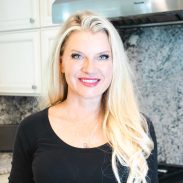
I went back to the gym consistently in 2020 during COVID and have not stopped since. When I moved to Utah in 2023, I increased my training days. In May 2025, at age 52, I competed in my first NPC competition as a Fit Model. Two months later I competed nationally at NPC Universe. I am currently studying for my NASM personal trainer certification.
I am not telling you this to intimidate you. I am telling you this because if I can go from 18 years of running and sporadic lifting to an NPC stage at 52, you can absolutely pick up a set of dumbbells twice a week and start building the muscle your body needs for the next 40 years. That is what this guide is about: getting you started with the minimum effective dose and showing you exactly what to do.
Table of Contents-Click to Expand
- How I Got Here: From Runner to NPC Competitor at 52
- Why Strength Training Matters More After 40
- Menopause, Bone Density and the Research That Changed Everything
- The Minimum Effective Dose: Two Days a Week
- Progressive Overload: The One Concept You Need to Understand
- Your Two-Day Full Body Starter Program
- The Biggest Mistake Women Make in the Gym
- Home Gym vs Commercial Gym
- Nutrition: Protein, Creatine and What You Need to Build Muscle
- Strength Training After 50: What Changes
- Frequently Asked Questions
Disclaimer: Links may contain affiliate links, which means we may get paid a commission at no additional cost to you if you purchase through this page. Read our full disclosure here.
How I Got Here: From Runner to NPC Competitor at 52
I actually started strength training way back in eighth grade. We had a weight bench in our garage and I would lift to try to get stronger for basketball. But like so many women, I drifted away from weights in the 90s when the fitness industry told us cardio was queen. I became a runner for 18 years. I ran through my 20s, 30s and into my 40s until my knees (and my orthopedic doctor) said I had to stop.
During college at the University of Cincinnati I lifted a bit more seriously while playing on the golf team, but it was never the priority. Running always was. When I had to stop running in 2012, I switched to yoga and walking as my primary exercise. For years that felt like enough.
But in my mid-40s, as I was creating content for Heal Nourish Grow and diving deep into the research on protein, longevity and metabolic health, I realized how much I was missing. Women lose approximately three to eight percent of their muscle mass per decade after age 30, and that rate accelerates after menopause. Yoga and walking are wonderful for mobility and mental health, but they do not build muscle or strengthen bones the way resistance training does.
That realization, combined with what I was learning about protein requirements for women and the new science on creatine for women, was the push I needed to commit. I went back to the gym during COVID in 2020 and have been training consistently ever since. Within five years I was on an NPC competition stage. The younger you start, the better, but it is never too late!
Why Strength Training Matters More After 40
The benefits of strength training for women are well documented, but they become urgent after 40. Here is what the research shows happens when you do not lift:

Muscle loss accelerates. The age-related loss of muscle mass (sarcopenia) begins in your 30s and picks up speed with each decade. After menopause, the decline in estrogen accelerates this process further. Without resistance training, you will lose muscle regardless of how active you are.
Bone density drops. Estrogen plays a protective role in bone metabolism. When it declines during perimenopause and menopause, bone loss accelerates. Osteoporosis affects roughly one in four women over 65, and the foundation for prevention is built in your 40s and 50s.
Metabolic rate slows. Muscle is metabolically active tissue. Less muscle means fewer calories burned at rest. This is one reason why weight management becomes harder after 40, even when eating habits have not changed.
Download This Program as a Free PDF
Get the two-day starter program, progressive overload tracker and nutrition cheat sheet in one printable guide.
Insulin sensitivity declines. Resistance training improves glucose uptake independently of weight loss. For women managing blood sugar, PCOS or taking GLP-1 medications, this is especially relevant.
A 2025 meta-analysis of 126 studies involving 4,019 women found that resistance training improved muscular strength equally in premenopausal and postmenopausal women, with no significant difference between groups. Read that again. Your ability to get stronger does not decline with menopause. What declines is the stimulus, and strength training provides that stimulus.
Menopause, Bone Density and the Research That Changed Everything
For decades, women with osteoporosis were told to avoid heavy lifting. The assumption was that high-intensity training would increase fracture risk. An Australian research team proved this wrong.
The LIFTMOR trial at Griffith University in Brisbane enrolled 101 postmenopausal women with osteopenia and osteoporosis and randomized them to either eight months of twice-weekly, 30-minute high-intensity resistance and impact training (five sets of five reps at over 85 percent of their one-rep max) or a low-intensity home exercise program.
The results were striking. The high-intensity group improved lumbar spine bone mineral density by approximately four percent compared to the control group. Femoral neck bone mineral density also improved. Physical function improved across every measure. Most importantly: zero fractures and zero serious injuries in the heavy lifting group.
Women who continued the program in a three-year follow-up saw lumbar spine bone mineral density improvements of 8.63 percent.
This trial fundamentally changed the conversation. Lifting heavy is not dangerous for women with low bone density when properly supervised. It is the most effective intervention we have for building bone.
If bone health is a concern for you (and if you are a woman over 40, it should be), creatine supplementation combined with resistance training has also been shown to support bone density. A meta-analysis of 1,093 participants found that creatine plus resistance training significantly improved strength measures in older adults.

The Minimum Effective Dose: Two Days a Week
Here is what I want you to hear more than anything in this article: you do not need to train five days a week to see results. I train five days because I compete. You do not need to do what I do.
A 2016 meta-analysis published in Sports Medicine by Schoenfeld and colleagues found that training each major muscle group at least twice per week produced superior muscle growth compared to training once per week. Two sessions. That is the evidence-based minimum for building muscle, not just maintaining it.
Two full-body sessions per week, 30 to 45 minutes each, with compound movements and progressive overload. That is enough to build muscle, strengthen bones, improve metabolism and meaningfully change your body composition. You can always add more later. But two days per week is where you start and it is enough to produce real results.
If you are also on a GLP-1 medication, resistance training becomes even more important because these medications can cause loss of both fat and lean tissue. The strength training program below is designed to protect and build lean mass regardless of whether you are on medication.
Progressive Overload: The One Concept You Need to Understand
Progressive overload means gradually increasing the demands you place on your muscles over time. Without it, your body adapts to the stimulus and stops growing. This is the single most important concept in strength training and the one most women miss.
Progressive overload does not mean adding weight every single session. It means making your workouts slightly more challenging over weeks and months through one or more of these methods:
Add weight. The most straightforward method. If you squatted 20-pound dumbbells last week for 10 reps with good form, try 22.5 or 25 pounds this week.
Add reps. If you did three sets of eight reps last week, aim for three sets of nine this week at the same weight. Once you can hit the top of your rep range with good form, increase the weight.
Add sets. Going from two sets to three sets of an exercise increases your total training volume.
Slow down the tempo. Taking three seconds on the lowering phase of each rep increases time under tension without changing the weight.
The key is tracking your workouts. If you do not write down what weight you used and how many reps you did, you cannot progressively overload. I use the Hevy app to log every session (it's free) and I strongly recommend finding a tracking method that works for you, whether it is an app, a notebook or a spreadsheet.
Your Two-Day Full Body Starter Program
This program is designed for women who are new to strength training or returning after a long break. It uses compound movements that work multiple muscle groups at once, requires minimal equipment and can be done at a commercial gym or at home with dumbbells.
How to use this program: Perform Day A and Day B on non-consecutive days (for example, Tuesday and Friday). Rest at least one day between sessions, ideally two. Start with a weight that allows you to complete all prescribed reps with good form while the last two to three reps of each set feel challenging. When you can complete all sets and reps with good form, increase the weight by the smallest increment available.
Day A: Lower Body Focus
Goblet Squat: Three sets of 10 reps. Hold a dumbbell at your chest. Sit back and down, keeping your chest up and knees tracking over your toes. This is your primary lower body builder.
Romanian Deadlift (Dumbbell): Three sets of 10 reps. Hold dumbbells at your thighs. Hinge at your hips, pushing them back while maintaining a slight bend in your knees. Lower the dumbbells along your legs until you feel a stretch in your hamstrings, then drive your hips forward to stand. This builds your posterior chain: hamstrings, glutes and lower back.
Dumbbell Row: Three sets of 10 reps per side. Place one hand and knee on a bench. Row a dumbbell to your hip, squeezing your shoulder blade at the top. This builds your back and biceps.
Dumbbell Overhead Press: Three sets of 10 reps. Press dumbbells from shoulder height to overhead. This builds your shoulders and triceps and develops functional pushing strength.
Plank: 3 holds of 30 seconds. Forearms on the ground, body in a straight line from shoulders to ankles. Build up to 60-second holds.
Day B: Upper Body Focus
Dumbbell Bench Press or Push-Up: Three sets of 10 reps. Lie on a bench and press dumbbells from chest level. If you do not have a bench, push-ups from your toes (or knees to start) work the same muscles.
Reverse Lunge (Dumbbell): Three sets of 10 reps per leg. Step back into a lunge while holding dumbbells at your sides. This builds your quads, glutes and balance.
Lat Pulldown or Assisted Pull-Up: Three sets of 10 reps. If training at home, use a resistance band anchored overhead or a dumbbell pullover. This builds your lats and upper back.
Dumbbell Hip Thrust or Glute Bridge: Three sets of 12 reps. Shoulders on a bench (or the floor for glute bridges), drive your hips up by squeezing your glutes. This is the single best exercise for glute development.
Farmer's Carry: Three walks of 30 to 40 steps. Hold heavy dumbbells at your sides and walk with good posture. This builds grip strength, core stability and total-body functional strength.
Rest between sets: 60 to 90 seconds for the first few weeks. As you get stronger and start lifting heavier, increase rest to two minutes between sets of compound exercises.
The Biggest Mistake Women Make in the Gym
The most common pattern I see is women picking up light dumbbells, doing 20 to 30 reps per set and never increasing the weight. This is endurance training. It will not build muscle. It will not strengthen bones. It will not change your body composition in any meaningful way.
The LIFTMOR trial that reversed bone loss in postmenopausal women used five sets of five reps at over 85 percent of one-rep max. The Schoenfeld meta-analysis that established the minimum effective dose for hypertrophy looked at programs using challenging loads in the six to 12 rep range. None of the research that shows real results in women over 40 involves pink dumbbells and 30-rep sets.
You need to lift heavy enough that the last two to three reps of each set are genuinely difficult to complete with good form. If you can easily finish all your reps, the weight is too light. This does not mean you need to start heavy. It means you need to start where you are and progressively work toward heavier loads over time.
Also note, if you are just getting started with strength training or it has been a few months since you last lifted, you should definitely start with lighter weights that feel somewhat easier. It takes joints a little longer to adapt to heavier loads so give yourself some extra time for that before starting to lift heavy. Lifting heavy is all relative anyway, all it means is lifting what is truly heavy for YOU, not what you see someone else at the gym lifting.
You will not get bulky, I promise! Women do not have the hormonal profile to accidentally build large muscles. What you will get is leaner, stronger and more defined. The “toned” look that so many women describe wanting? That is muscle combined with lower body fat. It comes from lifting heavier, not lighter.
Home Gym vs Commercial Gym
I train at both. My home gym includes a ForceUSA C10 all-in-one, an easy curl bar, a barbell, dumbbells and an assault bike. I also train at a commercial gym for the variety of machines and the energy of training around other people.
For beginners, you do not need a full home gym. A set of adjustable dumbbells and a flat bench will cover the entire starter program above. If you prefer a commercial gym, most gyms have everything you need. Do not let the equipment question delay you from starting.
If you do want to invest in a home setup over time, a good all-in-one machine like the ForceUSA C10 (use code HNG5 for a discount) eliminates the need for multiple pieces of equipment. It includes a Smith machine, cable crossover, power rack and leg press in one unit. I have been using mine for over a year and it handles everything from heavy squats to cable work.
Nutrition: Protein, Creatine and What You Need to Build Muscle
You cannot build muscle without adequate protein. The 2025-2030 Dietary Guidelines for Americans updated the protein recommendation from 0.8 grams per kilogram of body weight to 1.2 to 1.6 grams per kilogram, finally aligning official guidance with what the research has shown for years. For women actively strength training, I recommend aiming for the higher end of that range.
For most women over 40, this translates to at least 100 grams of protein per day, distributed across meals with a minimum of 30 grams per meal to stimulate muscle protein synthesis. Use my protein calculator to find your specific target based on your body weight and activity level.
Creatine monohydrate is the other supplement with a strong evidence base for women over 40. It supports training performance, muscle preservation, bone density and even brain health. Three to five grams daily is the standard dose. I take it every day.
Beyond protein and creatine, focus on eating enough total calories to support your training. Undereating is a common issue for women over 40, especially those who have been in a chronic diet mindset. You cannot build muscle in a significant calorie deficit. If you are new to tracking, start with protein first and let the other pieces fall into place.
Strength Training After 50: What Changes
The principles do not change. Progressive overload, compound movements, adequate protein and recovery still apply at 50, 60 and beyond. What does change is the recovery equation.
After 50, you may need slightly longer warm-ups (10 to 15 minutes instead of five), more attention to joint mobility and an extra day of recovery between sessions that train the same muscle groups. Sleep quality becomes even more important for muscle recovery and growth hormone release.
The 2025 meta-analysis I referenced earlier included women up to age 80 and found that strength gains were statistically equivalent regardless of menopausal status. The Isenmann 2023 trial specifically studied middle-aged women through a 20-week resistance training program and found meaningful body composition changes in both pre- and post-menopausal participants.
If you are over 50 and have never lifted, the starter program above is still your entry point. The only modification I would suggest is starting with lighter weights and spending the first two to three weeks focused entirely on learning the movement patterns before worrying about progressive overload. Once the form is solid and joints adjust, start adding weight.
I started competing at 52. The research says your muscles respond to training just as well as they did before menopause. The only thing standing between you and a stronger body is the decision to start.
Track Everything: Body Composition Over Scale Weight
When you start strength training, the scale may go up. This is normal. Muscle is denser than fat, so as you build lean tissue and lose fat, your body composition improves even if the number on the scale stays the same or increases slightly.
This is why I recommend tracking body fat percentage rather than scale weight alone. DEXA scans are the gold standard for body composition measurement. I have been doing DEXA scans since 2017 and the data has been invaluable for understanding how my body responds to training and nutrition.
At minimum, take progress photos every four weeks, measure your waist and hips and track your strength numbers. If your squat weight is going up, your waist measurement is staying the same or going down and you feel stronger, you are on the right path regardless of what the scale says.
frequently asked questions
How many days a week should a woman over 40 lift weights?
Two days per week is the research-backed minimum effective dose for building muscle. A 2016 meta-analysis found that training each muscle group at least twice per week produces superior hypertrophy compared to once per week. Start with two full-body sessions and add a third day once you have built consistency and confidence.
Will strength training make me bulky?
No. Women do not have the hormonal profile to accidentally build large muscles. Testosterone drives significant muscle mass gain and women produce a fraction of what men do. What strength training does create is a leaner and more defined physique. The toned look most women want comes from building muscle and reducing body fat, which requires lifting heavier, not lighter.
Can you build muscle after menopause?
Yes. A 2025 meta-analysis of 126 studies involving 4,019 women found that resistance training improved strength equally in premenopausal and postmenopausal women with no statistical difference between groups. Your muscles still respond to training stimulus after menopause. What changes is recovery time and the importance of adequate protein intake.
What should I eat to support strength training over 40?
Prioritize protein at 1.2 to 1.6 grams per kilogram of body weight daily, which translates to roughly 100 grams or more for most women. Distribute it evenly across meals with at least 25 to 30 grams per meal. Add three to five grams of creatine monohydrate daily. Eat enough total calories to fuel your training and avoid chronic undereating, which prevents muscle growth.
Is it safe to lift heavy with osteoporosis?
The LIFTMOR trial at Griffith University enrolled postmenopausal women with osteopenia and osteoporosis in twice-weekly high-intensity resistance training at over 85 percent of their one-rep max. The heavy lifting group improved lumbar spine bone density by approximately four percent with zero fractures. Supervision and proper form are essential but the research clearly shows that heavy lifting builds bone rather than breaking it.
How long does it take to see results from strength training?
Most women notice improved energy, better sleep and increased confidence within the first two to three weeks. Visible changes in muscle definition typically appear around six to eight weeks. Measurable strength gains (lifting heavier weights) happen within the first month for beginners. Body composition changes tracked by DEXA scan or progress photos become significant around the 12-week mark with consistent training and adequate nutrition.
Get the Free Two-Day Starter Program
Printable workouts, a four-week progressive overload tracker and protein targets in one PDF.
The Bottom Line
I spent 18 years running. I now actually regret those miles and wish I had started lifting seriously a decade or two earlier. The research is unambiguous: strength training is the single most impactful thing a woman over 40 can do for her muscle mass, weight control, bone density, metabolic health and longevity.
You do not need to compete. You do not need to train five days a week. You do not need a home gym full of equipment. You need two days, 30 to 45 minutes each, a set of dumbbells and the willingness to challenge yourself a little more each week. That is progressive overload. That is how you build a body that serves you well for the next 40 years.
Start with the two-day program above. Track your workouts. Calculate your protein target and consider adding creatine. If you are on a GLP-1 medication, read my GLP-1 workout plan for specific programming considerations. If you want a deeper dive into the science of building muscle during weight loss, my GLP-1 and muscle loss guide covers everything you need to know.
I started at 52 and ended up on a national stage. You do not have to go that far. But you do have to start.
This article is for informational purposes only and does not constitute medical advice. Always consult your healthcare provider before starting any exercise program, especially if you have existing health conditions or injuries.
Author